HOME PAGE

....  MYSTICISM  .....  PHILOSOPHY OF SCIENCE .... PARAPSYCHOLOGY  ....  Psychopathology .... QUANTUM THEORY .... THEORETICAL PHYSICS ....


Abstract by Prof Poynton


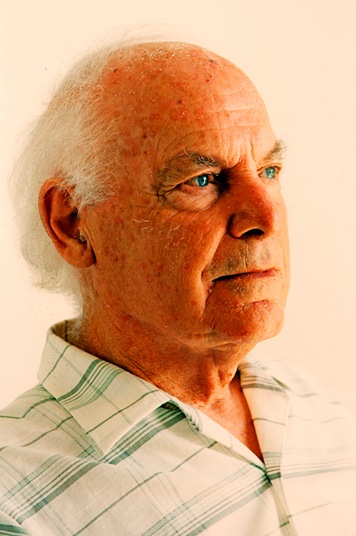
Introduction to Author


Professor Whiteman (who also wrote  under the name of Michael Whiteman)  published six books and more than  50 contributions to journals on spiritual development, psychical experience, depth psychology, mystical experience, and related scientific matters, including 20th Century Physics. He was born in London on 2 November 1906 and died in Cape Town on 5 February 2007, aged 100.


He taught in the Department of Applied Mathematics at the University of Cape Town for 29 years (General Relativity, Quantum Theory, and mathematical methods in general). His doctorate was on the philosophical Foundations of Mathematics. And later, with the help of Professor H.H. Price, a long-standing friend, and other authorities in the field, he wrote his volume on "The Philosophy of Space and Time", included in the Muirhead Library of Philosophy in 1967. This involved correspondence with leaders in Physics such as Heisenberg, and Dirac, with whom he was invited for lunch and discussion of a draft paper which Whiteman had sent to him.


Along with the above activities in mathematical Physics, and indeed from his fourth year until his death, Whiteman recorded a succession of "other-world" experiences ones from 1930 onwards. About 7000 experiences of various psychical or mystical types were diarised, all of them being in some way released from the physical body .


Among the consequences of this abundance of experiences was a close connection with leaders of the Society for Psychical Research in London, and the publication of many papers, the first in 1956. Whiteman was an honorary life member of the Society for Physical Research in 1999, and was awarded the Marius Valkoff Medal by the South African Society  for Psychical Research.


Whiteman also contributed to the American Society for Psychical Research over the course of many years. A paper on Quantum Theory and Parapsychology published in the Society's Journal led to an International Conference in Geneva on that topic. A long paper by him appears in the published Proceedings. A rather similar Colloquium, on "Quantum Theory and Beyond" was organised (by Bastin and Bohm) at Cambridge in 1968, and a paper by him on "Phenomenology of Observation and Explanation in Quantum Theory" appears in the published Proceedings (1971).


Soon after the publication of his first book ("The Mystical Life", 1961) Whiteman was contacted by a leading psychiatrist in the U.S.A, Professor Roland Fischer. This began a regular correspondence and exchange of ideas, continuing till Fischer's death some 35 years later. One of the chief fruits of this friendship was the publication, in the Journal of Altered States of Consciousness (Editor in chief, Fischer), on Fischer's invitation, of Whiteman's long paper on "The Mystical Model for Psychopathology", later included as Chapter 4 in his second volume on "The Meaning of Life" (2000).


In the late 1920's a beginning had been made by Whiteman with the study of ancient languages in which mystical teachings are described. In the course of time he gained proficiency in Vedic, Sanskrit, Pali (for early Buddhism), Hebrew, Greek, and Latin (this was learnt at school). And eventually he was able to study the classic texts in religion in the original languages. In due time, he taught Sanskrit to a few small groups, one of them reaching the level of classic Upanishad texts. A fruit of these Sanskrit studies is his 339-page book on the Yoga Sutras (with entirely new translations and commentaries).


Professor Whiteman engaged in private instruction, conducted study groups, and gave lectures to various societies - regularly to the Theosophical Society, but also by invitation to a Roman Catholic Priory, three Hebrew study groups, and the Buddhist Society of Oxford.


All this enabled a "Universal Theology" to be formulated, and published eventually as the third in a series of books on "Old and New Evidence on the Meaning of Life" (dated 1986, 2000, 2006).


In the second and third books of this series, an application of mystical insights to modern Physics (Relativity and Quantum Theory) was also set forth, showing how three time-dimensions are needed. Only one of these is measurable; the other two are for stopping or shifting in time. The principles of Tensor Calculus then lead to a correct formulation of the equations of Maxwell for the electromagnetic field (light, heat, radio, etc.), and also an extended form of Dirac's equation and an explanation of so-called "particle spin" (all this is concisely presented in Volume 2 of the series, and more fully in Volume 3)


Quantum Field Theory, the mathematics of which is especially abstruse, must accordingly replace Elementary Particle Physics. For the latter cannot explain "half-quantum spin", the phenomena in 'two-slit experience", the complex form of the field-equations, and other paradoxes in the particle theory.


In fact there is a very basic confusion in conventional Physics, between what Galileo called primary qualities (mathematically precise, for all observers, but never observed precisely) and secondary qualities (actually observed, but varying according to the observer's situation and state of mind). Physics takes a kind of average of "secondary" qualities (observed) to be their "primary" measures (unobservable and in fact unlocated physically).


But when the three time dimensions are admitted, one derives two 16-term creative cycles, the one "subjective" (psychological, spiritually experienced) and other "objective" (strictly logical, mathematically precise, universally applicable). Such cycles are found in almost every ancient religion, but usually "condensed" in simpler 12-fold or 4-fold forms. These last are likened to the four stations of the sun (E S W N), corresponding to psychological learning theory.


But the cycles apply to life in any "world", not merely the physical one. A coherent logical presentation of these mystical teachings, applicable in all worlds is a primary aim in Whiteman's three books on "Old and New Evidence on the Meaning of Life".


Consistently with the above, soon after 1937, when he came to South Africa, Whiteman acquired the status of a professional musician. He obtained a M.Mus. degree in composition from the University of Cape Town, and a F.T.C.L. in composition, He was trained, and performed in public, on the piano, the cello and the French horn, this last both in a professional orchestra and in chamber music. He was also trained as a conductor, conducted two amateur orchestras, and won a competition for conductors.


For two years he was a university lecturer in music at the University College in Grahamstown, returning to the Applied Mathematics Department at Cape Town in 1946. Assisting his wife with her very considerable piano teaching connection for advanced students, he conducted a piano teaching method class for licentiates from 1972, continuing till 1992, and also had successes in teaching the cello.


He was appointed Editor of the official journal of the South African Society of Music Teachers in 1941, and remained in that office for 55 years (till 1995), producing 110 issues. He was a member of the Council of the Society for 50 years and three times President. His later Editorials have rather often a musicological content, referring, for instance, to Mozart and 18th century Freemasonry, or Wagner and his use of Teutonic mythology.


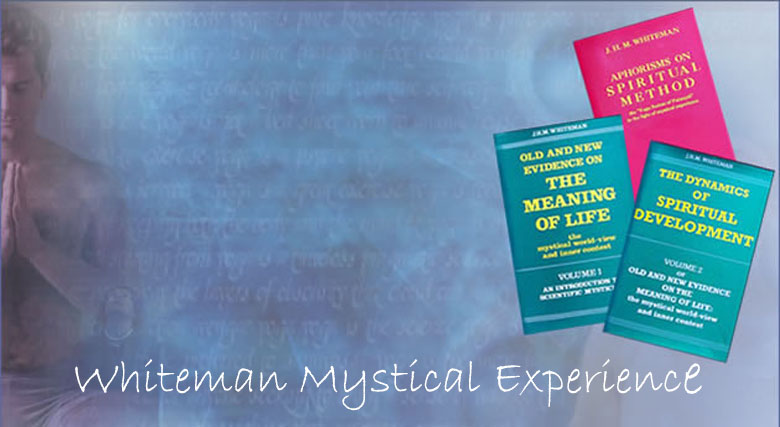
Four  books by Professor Whiteman are available:

A LIST OF SELECTED PUBLICATIONS ON MYSTICISM, PHILOSOPHY OF SCIENCE, PARAPSYCHOLOGY, AND PSYCHOPATHOLOGY

  CLICK HERE TO PLACE AN ORDER FOR THE BOOKS


YOU ARE VISITOR NUMBER:  Hit Counter

THIS WEBSITE DESIGNED AND UPDATED BY theclick: www.theclick.co.za

LAST UPDATED - 25 September 2009 10:57 AM

• Home • Aphorisms on Spiritual Method • The Meaning of Life • Dynamics of Spiritual Development • Previous Papers •